Guide 01 / access and attention
Observe a working grove
A palm grove can look like a shaded garden while functioning as private agricultural space. Begin with permission, routes and work—not with the most photogenic tree.
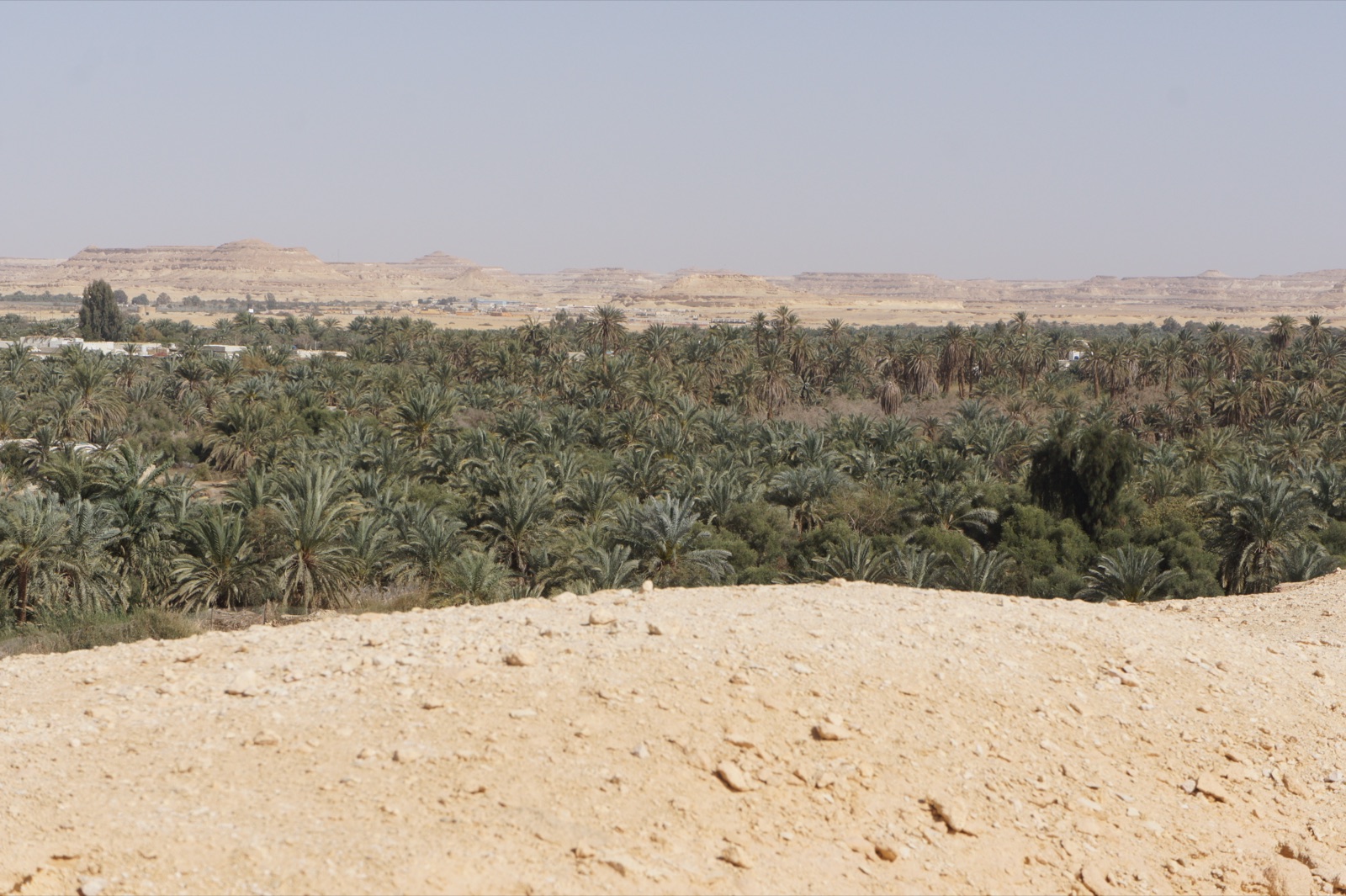

Confirm where you may stand
Use a public road, established visitor path or explicit invitation. An open gate, unfenced edge or visible footpath does not establish public access. Ask a responsible person when uncertain, and accept a refusal without argument. Do not enter alone because another visitor appears to have done so.
Read vertically from one position
Stop somewhere that does not block people, animals, equipment or loads. Scan the crowns first, then the middle layer and ground. Note palm spacing, other visible plants, exposed soil, shade and water. Use question marks for crops you cannot identify. A five-minute section is more useful than walking through several plots without context.
Three-line field note
Upper: crown spacing, fruit structures, visible maintenance.
Middle: trunks, other trees, routes and shade breaks.
Ground: crops, channels, soil and current work.
Keep irrigation clear
Open channels, damp banks, pipes, gates and drainage areas are working infrastructure. Do not step across narrow water simply because it looks easy, and never adjust a barrier or place a tripod on the edge. Wet or undercut ground can be unstable. Follow the route indicated by the person responsible for access.
Let work set the pace
Move aside for harvest, pruning, transport and maintenance. Do not ask workers to pause, repeat an action or explain while handling tools or working at height. If a conversation is offered, wait until the person chooses a safe moment. Agricultural work is not a visitor demonstration.
Keep away from the area beneath a palm being climbed or cut. Fruit, tools and leaf material can fall. Never climb, hold a ladder or take a rope unless you are part of the trained work team.
Describe without diagnosing
Brown leaves, standing water, white deposits or uneven crops can have several causes. Do not diagnose disease, salinity, waste or poor management from appearance. Record the visible condition and consult technical or local expertise if the question matters.
Let the visit remain partial
A brief observation cannot represent a whole season. Flowering, fruit care, irrigation, pruning and harvest do not all occur in one visible moment, and their timing varies. Write the date and the activity present without announcing a universal calendar. If no work is visible, do not assume the grove is inactive; the relevant task may occur elsewhere or at another hour.
Light, heat and wind also change what can be observed safely. Agree on an exit point, carry water appropriate to the visit and leave before weather or fatigue reduces attention. A shorter note made from a secure position is more useful than a long list gathered while wandering across routes or missing instructions.
Leave no field trace
Take nothing: no fruit, leaflet, seed, soil or discarded-looking material without an explicit offer. Pack out litter and avoid brushing against crops. Finish the observation before access becomes busy, weather becomes difficult or the responsible person needs the route back.
A working grove is readable from the edges when the observer accepts limits. Permission and distance do not reduce the field note; they reveal the routes, layers and decisions that make the grove more than scenery.