Guide 02 / people and work
Photograph with consent
A photograph can identify a worker, workplace and method long after the visit. Make permission as specific as the image and never direct a dangerous action.

Separate entry from photography
Permission to enter a grove, workshop or market does not automatically include permission to photograph. Ask the responsible person and the identifiable subject. Explain what you want to frame and whether it may appear online. If communication is unclear, choose a non-identifying landscape or material detail.
Never direct hazardous work
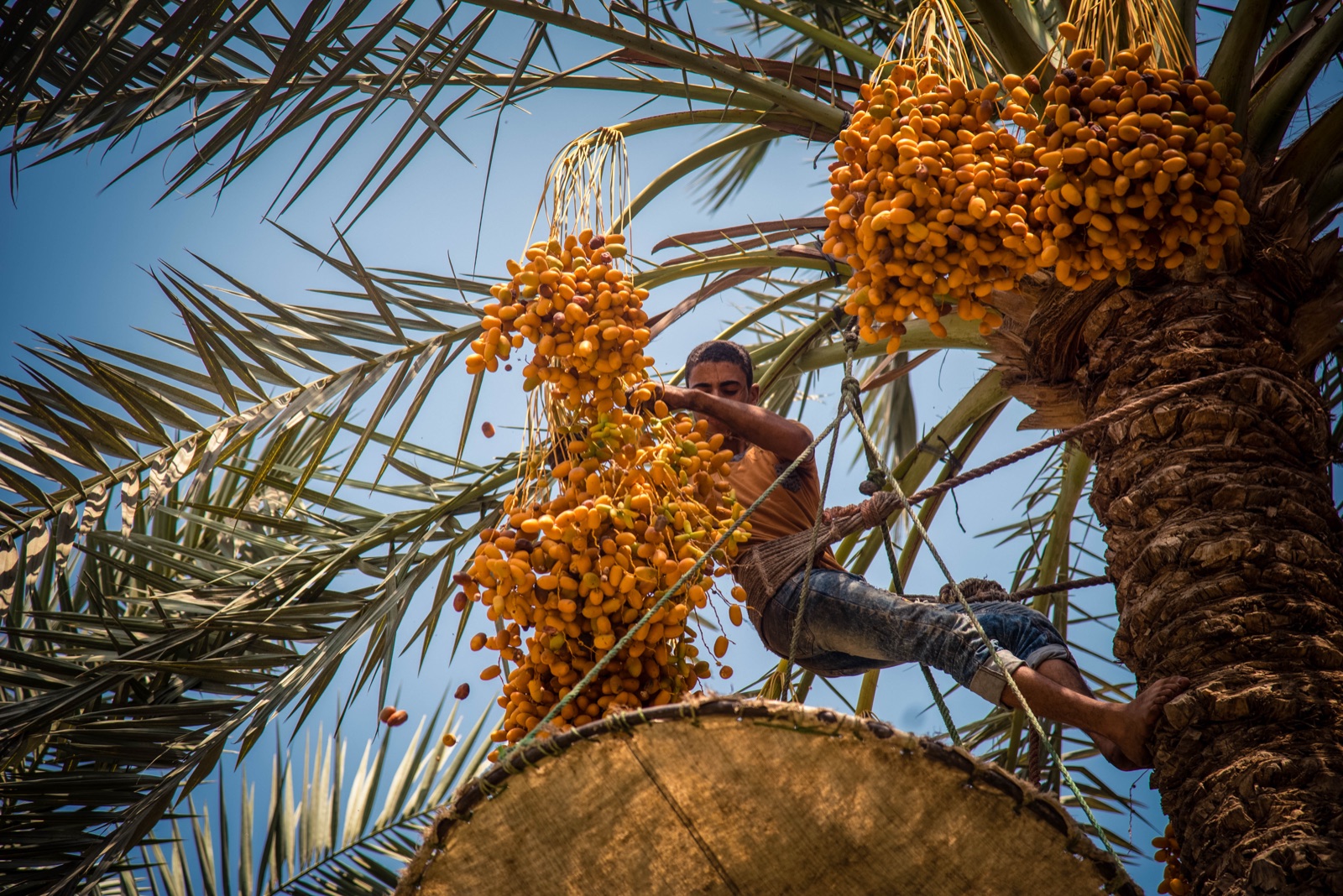
Do not ask a climber to look down, remove a hand, repeat a cut, lift a load or remain in position. Do not stand under the crown, ladder, rope or bunch. Use the designated safe area and accept obstruction. A less dramatic frame is the correct result when safety sets the distance.
Consent question
Describe subject, purpose and likely publication. Ask before shooting, not after. Make it easy to refuse, and show the frame if requested. A person can change their mind before use.
Keep children out without proper authority
Do not photograph identifiable children casually. Appropriate guardian consent and the child’s comfort both matter, and an agricultural or visitor setting does not remove privacy. A distant grove view can document context without turning a child into content.
Do not manufacture tradition
A person using palm material today is not automatically demonstrating an ancient, unchanged or village-wide tradition. Ask what the action and object are called. Attribute a statement to the maker when permitted, and avoid assigning ethnicity, family history or symbolism from clothing and location.
Likewise, handwork is not proof that every stage or material is local. A responsible caption distinguishes what the frame shows from what a source explained.
Caption the working conditions
Include the broad place only when sharing it creates no privacy or access concern. Name the action cautiously, credit the person if requested and permitted, and disclose when the scene was arranged. Do not imply that a worker represents all growers or makers in Egypt.
Before publishing, inspect the background for faces, vehicle numbers, documents, homes, location clues or private equipment. Crop or withhold the image when consent did not cover those details.
Control the frame, not the person
Composition can be changed by moving to another permitted position, waiting for a clear moment or choosing a wider or tighter frame. It should not be changed by moving tools, fruit, finished objects or workers. Make a small number of considered photographs rather than keeping the camera trained on someone throughout a task.
Avoid publishing precise location data for private fields or workshops unless the responsible people explicitly want it shared. Drone use introduces separate safety, privacy and legal questions and should never be assumed acceptable because ground photography was permitted. This guide is not flight authorisation; check current rules and obtain the specific permissions required.
Respect refusal and deletion
A refusal needs no justification. Lower the camera and continue without complaint. If someone withdraws permission before publication, delete the relevant images as agreed. Do not offer pressure disguised as publicity or education.
Good agricultural photography leaves work undisturbed and people in control of their representation. The image becomes stronger because its limits are honest: one permitted frame, one moment and no invented story around it.