
01 / Plant7 min
Read a date palm from crown to ground
Use frond form, leaf-base pattern, fruit position and offshoots without forcing a variety name.
A field journal above the shade line
Follow the date palm from frond and crown to layered grove, fruit bunch and the careful reuse of leaf material—without turning agricultural work into scenery.
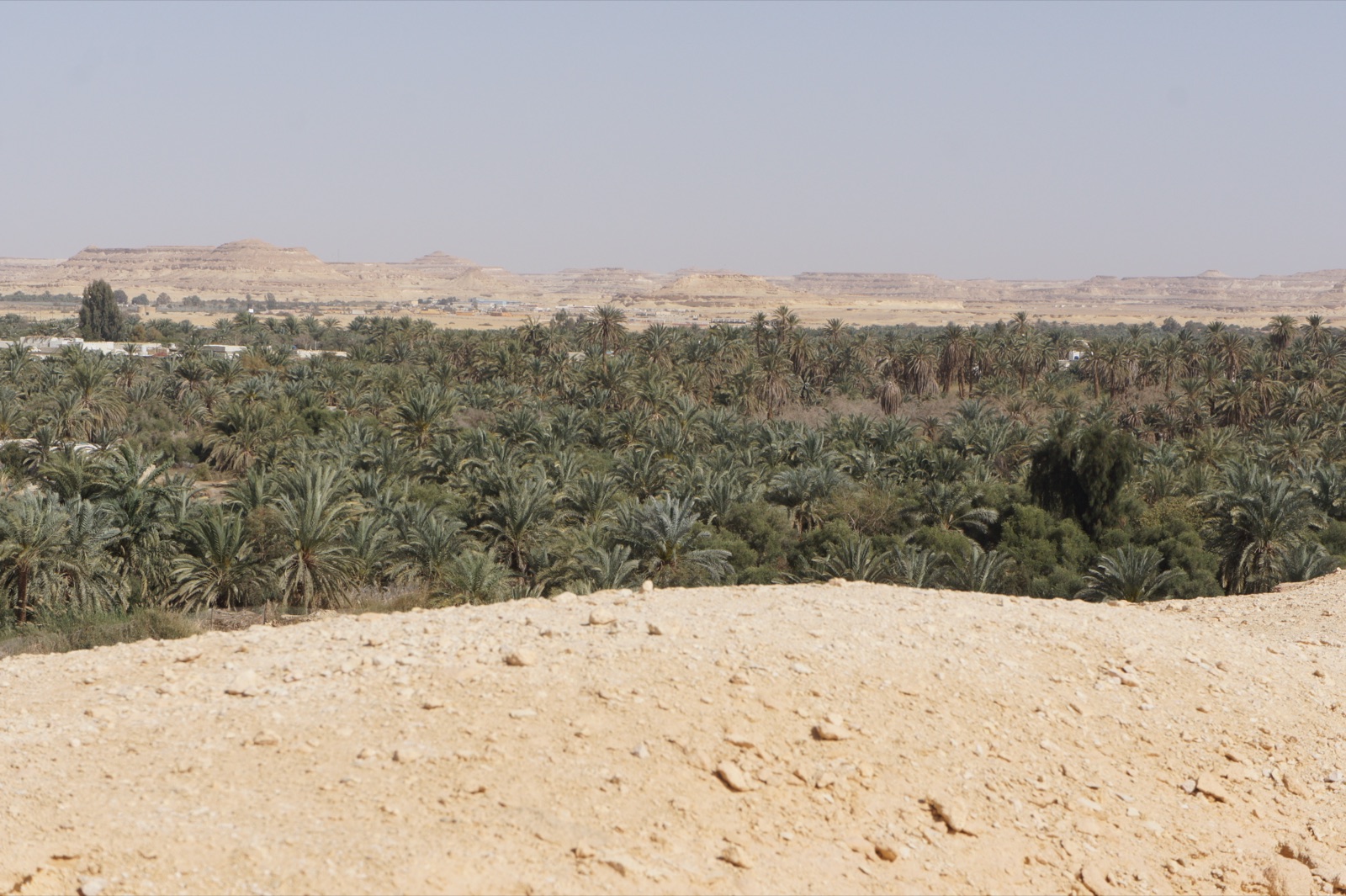
Siwa / orchard structurePhoto: Michael Hermann, CC BY-SA 4.0
Four field notes
A date palm is not only a silhouette. Its crown records growth, a grove organises water and shade, a fruit bunch changes through cultivation, and removed leaves can become working material.
Use frond form, leaf-base pattern, fruit position and offshoots without forcing a variety name.

Read upper canopy, middle growth and cultivated ground as a managed system rather than a green oasis cliché.
Understand why fruit production involves pollination, support, protection, timing and skilled work at height.

Follow palm leaflet from drying and preparation to a visible over-under woven structure.

The three-layer scan
Date crowns shape the highest layer. Look for spacing, crown condition and where fruit structures sit below the leaves.
Other fruit trees or vegetation may occupy partial shade. Do not assume every grove uses the same combination.
Channels, paths, crops, soil and maintenance reveal a working agricultural system. Stay on permitted routes.

Field principle
Groves, field edges and irrigation routes are places of work and ownership. Observe from public or permitted positions, keep channels clear and ask before photographing identifiable people.
Nile date palms. Photo: michael clarke stuff, CC BY-SA 2.0.
Photography and consent