Note 04 / prepared plant material
The leaf after the crown
A woven palm surface begins long before the first crossing strand. Selection, drying, splitting and moisture determine what the leaf can become.

A date-palm frond contains several material zones. The central axis is strong and elongated; leaflets are narrower, more flexible elements; the base is thicker and shaped by attachment to the crown. A finished object may use one part, combine several or include material from another palm species. Visual resemblance is not enough to identify every strand as date palm.
Removal is a management decision
Leaves age and may be pruned for crown access, plant care, harvest operations or material use. Cutting too many living leaves can affect the palm, so removal belongs to experienced management. A visitor should never detach a leaflet, pull a dry base or collect material from a grove without permission.
Discarded-looking fronds may already have an intended use. Their location beside a path does not make them free souvenirs.
Preparation changes the leaf
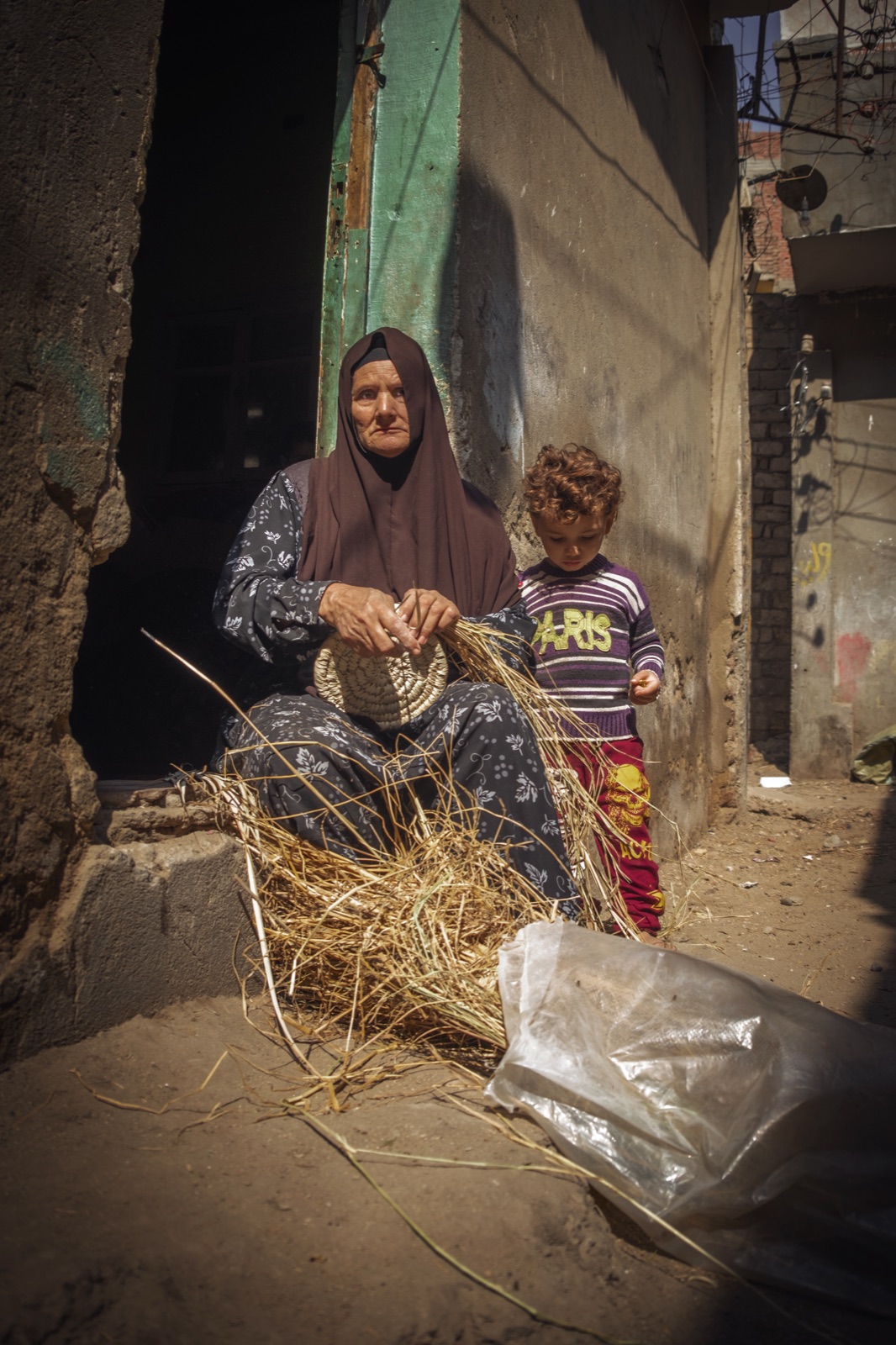
Craft preparation can involve sorting by maturity and condition, drying, cleaning, splitting leaflets into narrower widths, flattening, softening or moistening them before work. Exact sequences vary by maker, object and local practice. Colour may reflect leaf age, drying, deliberate treatment or later wear.
A photograph of finished weaving cannot prove the soaking time, tool set or source grove. Ask a maker when context is offered, and attribute the explanation rather than presenting one process as universal.
Material reading
Look for strand width, colour range, fibre direction, edge treatment, joining points and the places where the weave changes around a corner or rim. These features are visible even when the maker and exact process are unknown.
Over and under create stability
The closest view shows sequence. A strip passes over one element and under another; the neighbouring strip may reverse the order. Repetition distributes contact across the surface. Changes in strand direction can shape an edge, close a base or build a wall.
Do not call every crossing “basket weave” if the object and structure are unknown. Plaiting, weaving, coiling and wrapping describe different ways of organising material, and finished objects may combine them. Describe the visible path of each element before assigning a technical category.
Variation is functional information
Hand-prepared strands are rarely identical. Slight width differences, colour shifts and local adjustments can reveal how a maker responded to material. Variation is not automatically a flaw. At the same time, irregularity alone does not prove that an object is handmade, old or locally produced.
Turn an object only with permission. The underside, rim and join can reveal structure, but handling may damage fibres or interrupt a seller’s display. Photographs should not rearrange stock without consent.
Use needs evidence
Palm material can appear in containers, mats, screens, ties and other objects, but a fragment should not be assigned a function from texture alone. Scale, shape, wear and provenance matter. In a museum, use the object record. In a workshop or market, ask how the item is named and used without assuming that one answer represents all Egypt.
Claims such as “traditional,” “sustainable” or “waste-free” require specifics. Plant material may be renewable, yet sourcing, labour, durability, transport and disposal still matter. A responsible caption names the material and structure it can support, then leaves broader claims to evidence.
Wear is not a reliable clock
Polished crossings, faded fibres and softened edges can indicate use, handling or exposure, but they do not provide a date by themselves. New material can dry quickly, while an older object may have been stored away from light and abrasion. Repairs introduce strands of another colour or stiffness without necessarily revealing when the original was made.
When age matters, use a museum record, maker’s account or documented ownership history. Otherwise describe the condition visible now. “Broken strand at the rim” is stronger evidence than “ancient basket,” and it keeps conservation needs separate from an invented biography.
Keep the maker in the frame
A close-up can make craft look anonymous and automatic. Record the maker’s name only with permission and spell it as requested. If no maker information is available, say so. Do not invent a village, lineage or cultural symbolism to enrich the image.
The woven leaf is valuable because preparation and structure remain visible. Read the crossing, edge and join. They show decisions in material—without needing a romantic story to make the work significant.