Note 03 / managed fruit cycle
From fruit bunch to harvest
A photograph of harvest compresses months of biological development and skilled care into one frame. Read the earlier stages before treating the climb as the whole story.

Date production begins before fruit is visible. Male and female flowers are normally carried on separate date palms. In cultivated groves, growers often transfer pollen from selected male flowers to female inflorescences. Methods and timing vary. A visitor may see tied material or worked flower clusters, but should not infer a complete pollination method from one glimpse.
The bunch changes weight and exposure
After successful pollination and fruit set, many dates develop along strands branching from a central stalk. As the bunch grows heavier, its position relative to leaves and trunk matters. Growers may thin fruit, adjust strands, support stalks or protect bunches, depending on cultivar, climate, pest pressure and intended product. No single treatment should be presented as universal Egyptian practice.
A bag or covering can have several purposes, including protection from weather, birds, insects or falling fruit. Colour and material alone do not reveal the exact reason. Record the visible arrangement and ask a responsible grower if explanation is invited.
Four-stage visual note
Flower structure → small developing fruit → enlarging coloured bunch → harvest and sorting. A single visit may show only one or two stages. Do not fill the missing stages as if observed.
Ripening is a sequence, not one colour
Date development is commonly described through named stages, from immature green fruit through full-size coloured fruit and softer, darker ripening to a lower-moisture mature date. The Arabic technical terms often transliterated as kimri, khalal, rutab and tamr are useful, but boundaries, preferred eating stage and vocabulary can vary.
Yellow, red or brown appearance does not by itself identify variety or readiness. Cultivars differ, bunches can ripen unevenly and post-harvest handling changes the final product. A caption should say what the image shows rather than certify quality.
Harvest is work at height
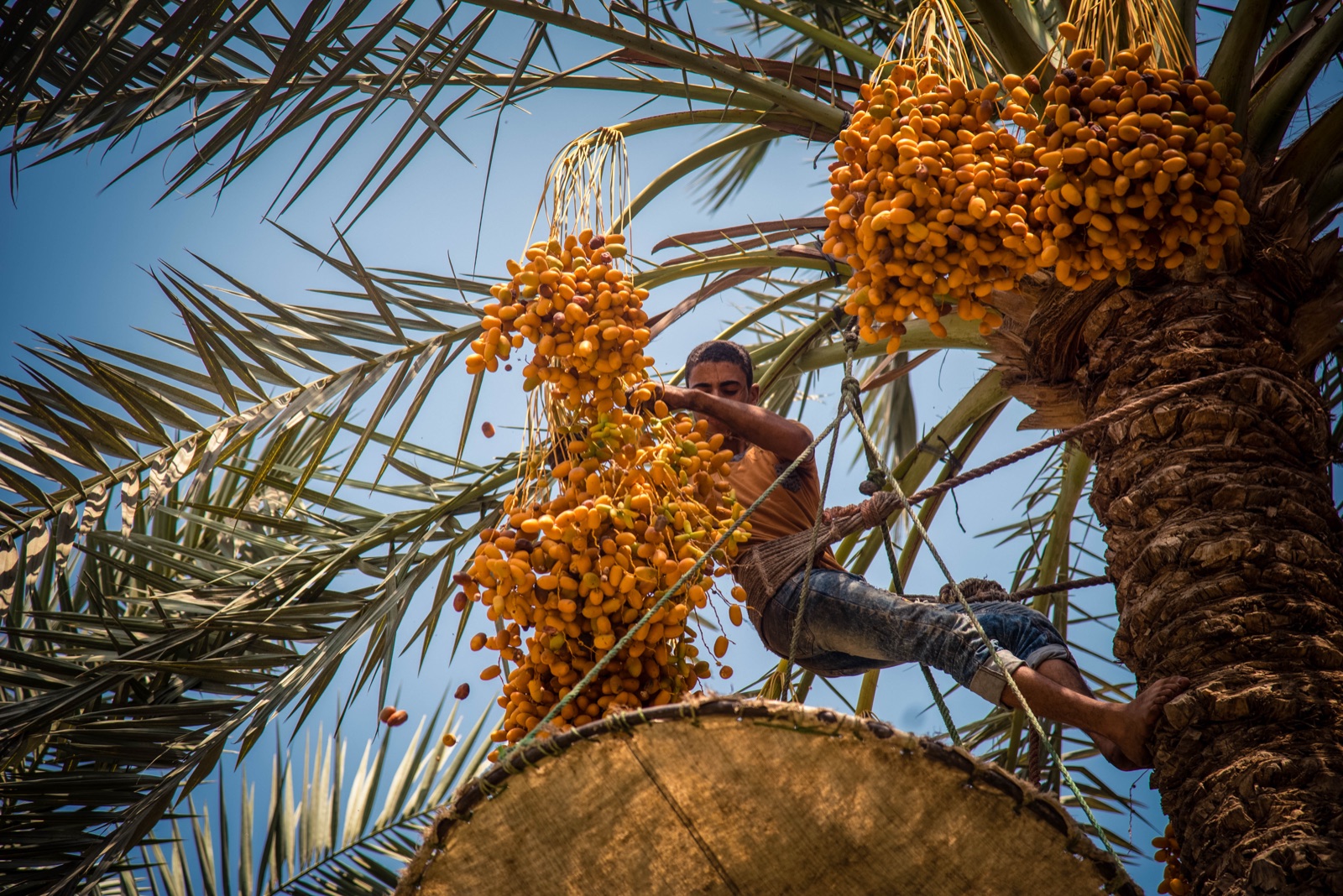
The crown of a mature palm places bunches far above the ground. Harvest may involve climbing systems, ladders, platforms, lifting equipment, ropes and ground teams. The method depends on local practice and resources. Visitors should never imitate a climber, ask for a demonstration, stand beneath a load or enter the drop zone.
A dramatic image can hide the team and planning below. Look for containers, rope routes, cleared space and the transfer of bunches. Do not move equipment or obstruct the path between palm and sorting area.
One harvest may involve several passes
Fruit within or between bunches may not reach the preferred stage simultaneously. Harvest can therefore be selective or repeated rather than a single removal of every bunch. Exact calendars vary by location, cultivar and conditions. Upper Canopy Egypt does not publish a guaranteed harvest month.
Weather and market requirements also affect decisions invisible to an observer. Avoid interpreting fruit left on a palm as neglect or fruit being removed as automatically ready for immediate retail.
Build an honest visual sequence
If several stages are visible, photograph each from a permitted position with a short note about what can actually be seen: small fruit, changing colour, a supported stalk or a lowered bunch. Do not rearrange loose fruit to manufacture a progression. Images made on different dates or in different groves should not be presented as one palm’s continuous cycle.
Scale matters here too. A close detail can show fruit density and colour variation, while a wider view explains bunch position beneath the crown and the working space below. Pairing those frames communicates development more accurately than a single spectacular harvest image.
Sorting continues the cycle on the ground
Once lowered, dates may be separated, cleaned, sorted and handled according to their condition and destination. A field photograph of fresh bunches does not establish later processing, storage or food-safety practice. Those questions require information from the producer or responsible authority.
When photographing, ask before including identifiable workers. Explain whether the image will be published and do not request a repeated lift, climb or cutting action. Good documentation follows the real pace of work from a safe distance.
The fruit bunch is best understood as a changing load within a managed biological cycle. Pollination, development, support, protection, harvest and sorting all matter. The visible climb is important—but it is one skilled link, not the entire chain.